Showing posts with label history. Show all posts

Sunday, August 29, 2010

EGYPTIAN MUSEUM

The greatest collection of Egyptian antiquities is, without doubt, that of the Egyptian Museum in Cairo. It is a place of true discovery and, even after many visits, I continue to make new and delightful discoveries every time I venture into its many galleries. To be sure, the museum can be daunting in the sheer numbers of its antiquities on show, but there is an order within its layout and it is a dream come true for anyone wanting to study Egyptian antiquities.
However, the negative side is that the environmental and display conditions leave a great deal to be desired. Labels on some exhibits date from early in the century and many items have no labels at all. Guidebooks are available at the museum, although they are limited to some of the major items.


The museum's ground floor follows the history of ancient Egypt. Upon entering through the security check in the building, one looks toward the atrium and the rear of the building with many items on view - from sarcophagi and boats to enormous statues. Just in front of these you will find an Object of the Month on display. Behind it are some of the most important items from the time of the unification of Upper and Lower Egypt some 5,000 years ago, including the famous slate palette of king Narmer - one of the first documents of Egyptian history. Also on show are small masterpieces of sculpture - keep in mind that these are some 50 centuries old. This is an area that should not be missed!

Continuing around the building in a clockwise direction takes you forward in time as you duck into the different rooms. At the far end of the building you will be confronted by material from the time of the heretic pharaoh, Akhenaten.
Keep moving and eventually you will have reached the Graeco-Roman period and walked through more than 3,000 years of history!
Upstairs on the first floor (i.e.second level) are thousands of smaller items from the span of Egyptian history. Of course, everybody wants to see the treasures from Tutankhamun's tomb - these occupy a large area along almost two side of the upper floor. Chariots, gloves, jewellery, the famous mask - many of the antiquities from his tomb are displayed here. Tutankhamun's tomb contained four gilded shrines nested one inside the other. All four of these shrines are on display in the museum. They are lined up in order of decreasing size. The innermost of these covered a stone sarcophagus which remains in the tomb.
Inside the stone sarcophagus were three coffins - the innermost being made of 110 kilograms of solid gold. Inside that lay the pharaoh himself wearing the famous gold mask (at right). Tutankhamun remains in his tomb to this day.

Two of his three coffins are on display in the same room as the mask, along with stunning jewellery. This room alone can occupy one for a considerable time. The room has been remodelled recently with better presentation. Obviously, there are usually crowds, although often these lessen toward the end of the day. It is therefore a good idea to leave the Tutankhamun exhibits until later, unless one is short of time.
Apart from the Tutankhamun exhibits upstairs, there are countless coffins, amulets, ushabtis, household items, etc. Some of the Middle Kingdom tomb models of armies, boats and landowners surveying their livestock shouldn't be missed. The human figures almost seem alive! Also upstairs is the Mummy Room where you can come face to face with some of the great rulers of ancient Egypt

The photographs shown here feature the atrium area and the area to the right of the entrance. From the entrance area itself, turn left and you will find an amazing diversity of small statues from the Old Kingdom - they depict individuals, families, and people at work.


Ramadan


Currently, Ramadan is being celebrated in Egypt. It began on October 15th and will end on November 14th with the feast of Eid al-Fitr. Tourist Egypt are often asked about travel during this period. People are concerned about this being a bad time to visit Egypt, but in reality, it is an excellent, festive period which simply adds to the fun. Tourist attractions and facilities continue to operate, but there are great celebrations and a wonderful time for all.

However, it should be noted that officially, monuments and other tourist sites are open until 3:00 PM, while in reality, some of the less frequented sites may close earlier (2:00 PM). While there are many restaurant (though not all) open to tourists, many may not serve alcoholic beverages during Ramadan. However, almost all larger hotels, as well as smaller hotels that cater to tourists will be completely operational, including their bars, and they will serve alcoholic drinks as usual.

Spending the holy month of Ramdan in Egypt is different than elsewhere. Other than the rituals practiced during that month, certain social habits of Egyptian Muslims are much different than anywhere else.

Ramadan is a month that follows the lunar calendar, the basis of the Islamic (or Hijri) calendar. With an eleven-day offset from the Gregorian (western) calendar, the exact timing of Ramadan during the year is variable, sometimes falling in summer and sometimes in winter. The first day of Ramadan too is variable, since "Sha’aban", the preceding month, sometimes has 29 days and sometimes 30 days. Astronomical calculations are utilized to detect the birth of the new moon, yet the cornerstone remains to be its visualization after sunset. Ramadan lasts for 29 or 30 days, as do most lunar months.

The holiness of this month comes from the fact that it marks the day when the Holy Spirit, Gabriel, started the transmission of God’s message to the prophet Mohammad, fourteen centuries ago. The exact date has never been identified, but it is believed to be on one of the last ten days of this month, which Muslims call "Lailat el-Qadr". According to Islam, the month is dedicated to prayers, as it is believed that it is an occasion to wash one’s sins away and enjoy God’s unlimited mercy.

The principal ritual during Ramadan is fasting. This entails abandoning eating, drinking, smoking or sinning, even if minor, throughout the whole day, from dawn to sunset. Though the usual daily practice is in most ways normal, Muslims prefer to spend more time praying or reading the Qora’an, particularly at night.

The daily meals become limited to two, the first of which is the "iftar" when fasting is broken just after sunset. The iftar can be a real bonus to tourists, as many of the hotels offer highly competitive specials for ifar.

The timing of the second meal, "sohour", is variable according to personal preference, but usually delayed as much as possible until just before dawn. In between "iftar" and "sohour", people are allowed to eat as they wish.

What makes this month different in Egypt? A long time ago, Egyptians adopted certain social habits during this month that are not directly related to religion. Officially, the working hours are diminished to allow more time for prayers. People usually sleep very late and spend considerable time in the mosques. The traditional practice starts immediately after sunset, which is announced to people through all mosques by the ritual "azan", or the call for prayers. Once, beginning in the 16th Century, it was the habit of the Egyptian government to fire a canon which could be heard throughout Cairo to announce end of the daily fast. This loud shot was fired from the Citadel over the "el-Moqattam" mountains. Modern technology has replaced this habit so that now announcements are made on radio and TV.

"Iftar" is considered the main meal of the day during Ramadan and is often very rich. Any type of food might be served, but traditionally the desert almost always includes "konafa" or "qatayef". The former is a cake-like food made of wheat with considerable sugar, honey, raisins and different types of nuts. The later is almost the same, but takes the shape of a small circular cake, which is folded to include nuts and raisins.

Since Ramadan is considered to be the most joyful month of the whole year, children also have their share of fun. The "fanoos" or lantern is a must for every kid. These are traditionally made of tin and colored glass, with a candle inside. More modern examples are battery operated, but really lack the spirit (though each year there seems to be a trend to see who can produce the most snazzy fanoos). All mosques and streets during the whole month are full of colored lights in a festival fashion, and in the past, children played in the streets with their lanterns, singing "wahawy ya wahawy". This tradition is still practiced, though rarely now in the streets, except in middle class or poor neighborhoods, and in the countryside.

With the introduction of TV in the 1960’s, traditions changed. TV transmissions lasts 24 hours a day, and the programs include too many new serials and movies. More than half of the serials produced by the Egyptian TV are broadcast during Ramadan for the first time. another traditional program is the "fawazeer", which is a daily riddle usually broadcast during a comedy or musical show. The family is usually gathered around the TV for long hours, if they do not go for prayers. Nuts are consumed as a snack, together with a traditional drink "qamar el-deen1" which is made of apricot. Most people prefer to spend at least the first day in an extended family reunion, gathering in the home of the grand parents’.

After the first few days, people start to go out after "iftar". Hence, many gatherings between families, friends or colleagues take place for the main meal, and for socializing afterwards. since many people prefer to spend their time in the old fashioned atmosphere of cafes, many hotels now actively market their facilities for this festive occasion. Today, it has become a tradition for all 5-star hotels to erect a large tent, furnished in the old Arabian decoration, where people enjoy their time listening to old traditional songs and music. It all recalls memories of the old classical days. "Sheesha" or water-pipes are smoked almost continuously.

Sports are also popular during Ramadan. Most clubs arrange minor tournaments, especially for football (soccer). Many people of all ages participate in games, including the elders who compete with their peers. It is not unusual to find many professional football players among these teams of amateurs. The issue is not to win, but to share. In poor districts where no clubs are available, the youth and children can utilize a side street or alley as a football field. During Ramadan, people become very tolerant of such activities, though they are not encouraged during other times of the year.

The show continues until late at night, and sometimes right up until the dawn prayers, after which people finally sleep. Of course, not everyone follows this routine. Many somewhat older people find it difficult to keep pace with these celebrations, and of course some must continue to work (for example, those in the tourism business). In the old days, the tradition was for man called a "mesaharaty" to walk down the streets before dawn with a drum. He would wake up the people by singing and calling their names. The mesaharaty was not paid a fixed salary but received donations, and though this profession is now extinct, amateurs continue to practice the tradition.

The worst experience a student might experience is if Ramadan coincides with exams. If possible, the exam timing is shifted by the school or university. But if this is impossible, then the fun may be lost. The majority of people fast during Ramadan, though according to Islam, the sick, travelers, elders and children are not required to follow this requirement. Since the days are longer in summer and the weather is hot, fasting sometimes become difficult. Children usually start demanding that their parents allow them to fast at an early age, though they are usually not allowed to do so before the age of ten, and then only for a short duration. The sick also try to fast, though of course this may be very difficult for them. In fact, no one would ever wish to miss a single day of fasting during this month, although it is possible to compensate later. It is not just the religious obligation, but also the atmosphere.

It is not considered good manners to outwardly make a display of not fasting. Though not illegal, those who do not fast would usually hide to eat, drink or smoke. Egyptian Christians also share also participate in most of these practices with their fellow Muslims. Some would also fast as a sign of national unity, but even those who do not would never eat or drink in public, as a sign of respect to Islamic traditions. Alcoholic drinks are prohibited throughout the month, and all bars are closed (with the exception of many tourist facilities)

On the last day of Ramadan, observatories again check for the new moon. The month ends after the 29th or 30th day, when the "eid" or feast begins.

1. This drink is usually made from from dried apricot sheets, or past, which is placed in boiling water. Qamar el-deem sheets, as they are called, can be found in many specialty Middle East markets. It is also used to make an apricot pudding.

Muslim Weddings in Egypt


The population of Egypt is 94% Sunni Muslim, thus the culture of the country is highly influenced by traditional Muslim practices. This includes areas pertaining to marriage, although Egypt is less traditional in this area - particularly in the relationship of the couple before a marriage - than many other traditional Muslim countries.

Meeting a partner
Traditional Islamic practices in Egypt dictate that there is to be no dating or other types of interactions prior to a couple's getting married. However, there are still social occasions where Egyptian men and women have a chance to meet each other. Usually, this will take place at a school or in a place of work.
In such circumstances, it is possible that a young man and a young woman may fall in love and desire a marital union. These marriages are traditionally opposed, although the family will usually relent if the couple remains committed to the idea, as long as both the man and woman are of the same social and educational status. Outside of a love match, Egyptian weddings are arranged, with the families of both bride and groom making inquiries of friends, relatives, and neighbors as to the other's standing and conduct.
If a union is deemed suitable by both families, the man and woman are permitted to meet and begin socializing. If they like each other, several more meetings with families are arranged, and an engagement party organized. At this party, the groom will give the bride a wedding ring

The Ceremony
The marriage contract is signed by the groom at the ceremony along with the family of the bride. There are also members of both families present as witnesses, although the bride herself is not in the room. Instead, she waits in a separate room and the contract is brought to her for her approval.
The ceremony itself follows traditional Muslim practices, including reading passages of the Quran and the Kitbah (formal betrothal). It may take place in a mosque, a secular establishment such as a hotel, or at the home of one of the couple's family.
The reception

The wedding ceremony at an Egyptian wedding is followed by the wedding feast, or walimah. In urban areas, this feast is celebrated with both sexes present, and includes a formal presentation of the couple, who often walk holding hands down a path formed with two lines of guests on either side. The rings which were received at the engagement party are switched from the right to the left hand, and there is cake, meats, pastry, sweets, nuts, salad and rice in large quantities. The bride will often throw a bouquet to the unwed ladies at the wedding, with whoever catches it forecast as being the next to get married. There is also music and dancing.

Weddings in the Egyptian countryside are more formal. Men and women are often segregated, with the bride covering her face with a veil during the ceremony.

Egyptian Marriage Customs of the Past and Present

An Islamic wedding procession in Egypt leads the bride to the home of the groom. The bride, hidden from view in a tentlike covering, is riding the camel. Elaborate processions like this one are chiefly a rural tradition of the Islamic wedding ceremony.


Marriage has special importance to Egyptians. They consider marriage as the most important event in their lives because it means a moral way of psychological and biological satisfaction. Egyptians assume marriage is the main method to protect youth from any sacred relationships; moreover, marriage reinforces society's relationships.

Marriage is a religious imposition, and we can find many parts in the Quran as, well as prophetic instructions, which encourage getting married. There is no doubt that marriage customs indicate the society's culture, behaviral patterns, thoughts and feelings.

Egyptian Marriage Customs in Ancient Egypt

Now let's indicate some Egyptian marriage customs in the past and present and their main effects.

The ancient Egyptians were the first people who stated marriage laws in the world. They regarded marriage as a civil and legal relationship. Marriage in ancient Egypt was a religious imposition. The ancient Egyptian laws organized the marriage relationship and indicated all rights and duties for the couples. Many of the old marriage contracts have been found, and they were registered and signed by three officers. The ancient Egyptian laws gave the right of divorce to women as well as men. The wife was respected greatly, and she had high prestige. The couple had a lot of chances to get to know each other before the engagement; for example, in the temples or at the common feasts. There was a custom in the Egyptian family which allowed the adult daughter to welcome the guests who came to visit her parents.


The Engagement Party in Ancient Egypt

The ancient Egyptians knew the engagement before getting married, and its customs were similar to the engagement customs in Egypt's countryside nowadays. It started by the suitor's parents visiting to his fiancee's house to get her family approval to complete this marriage and reaching an agreement, which contains two main items: an amount of money, called Mahr, paid by suitor to his fiancee's family to help them prepare the furniture of their daughter and a valuable jewelry gift, called Shabka, given by the suitor to his fiancee. The value of this gift depended on the financial and social levels of the suitor"s family.

When the two parties completed the agreement, they fixed an appointment for the engagement party. Most of relatives and friends attended the party in one of the common banquet halls, which was decorated with several kinds of flowers and lights. The fiancee wore the engagement dress which was simpler than the wedding dress and its color was blue or pink while the groom put on the finger of his fiancee a ring, the ancient Egyptians' gift to the old and new world,which was a symbol of immortality.

In addition, the groom gave his fiancee the valuable jewelry gift agreed on before. During the party, the attendands ate and drank several kinds of food and drinks.

The Night Before the Wedding

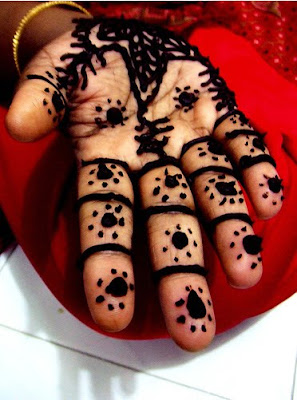
When the house of the new family became ready, the two families fixed an oppointment of the wedding party. The night before wedding day, the relatives, the friends and the neighbors got together to celebrate the "Henna Night". The women went to the bride's house, while the men went to the groom's house.

At the bride's house the women danced and sang all night while the bride wore a pink dress made with silk or cotton fibers, and her hands and feet were bleached with henna. Meanwhile, the men danced and sang all night at the groom's house, and the groom wore an expensive clean suit.

The Day of the Wedding

The next day, the marriage contract was signed and registered by priest in the temple in the attendance of the couple and most of their families and friends

The Wedding Party

After sun set, the wedding party started, and the couple wore their best dresses and jewelry. The bride was transferred to her new house on a horse or a camel with a musical band, and the attendants sprayed the cortege with green wheat as a symbol of fertility. Several kinds of cooked meats as well as vegetables and fruit were prepared for the attendants, who danced and sang with music all night.

The Day After the Wedding

In the morning, the wife's mother and her sisters visited her and gave her some food. The wife's friends and relatives visited her after seven days from the date of her wedding party, and they offered gifts and some food, while she gave them some sweets and fruits.

Ancient Egyptian marriage customs are the most effective marriage customs in Egypt's history although Egypt has been exposed to many civilization, such as, Greek, Roman and Islam.

Islamic Marriage Customs

The Islamic marriage doctrines are very simple, they are basically two factors. First, the acceptance of the couple, or their representatives, each other to be husband and wife is the most important term for marriage. Second, the publicity of the marriage (making it known to the people) is an essential condition of marriage; however, Islam emphasizes that marriage is the only available way to satisfaction the biological need between the man and the woman and to make the family; therefore, the available chances for the couple to get to know each other before the engagement have become limited, mainly through family visits or at public places.

The engagement and wedding customs in the Middle Ages remained as they were in Ancient Egypt although these customs are in disagreement with the simplicity of the Islamic spirit.

Marriages in Modern Urban Egypt

Nowadays, the marriage customs in the Egyptian countryside are similar to the ancient customs, but in the city the picture is quite different, where the couple has many chances to get to know each other at university, work, clubs and other public places.

However, the engagement agreement between the families still includes the two main items: the "mahr" and "shabka"; furthermore, the engagement party is quite similar to the engagement party in Ancient Egypt. Frequently it is held in one of the hotels.

However, the engagement period has be come longer because of the preparation of the new house is costly and does not suit the income of the couple or the income of their parents (housing is very expensive in Cairo).

The marriage contract is signed and registered by "maazon", a man who has an official license to sign and register the marriage contract, in attendance of the couple and their families and friends, and this procedure happens in the birde's house or at a mosque.

The Wedding Party

At the wedding party, the bride wears a while dress with a white mantilla while the groom wears a black suit with white shirt and necktie, and in the hotel the couple walks among their invitees from the entrance of the hotel to their seats, and infront there is the music band. The attendants spray flowers over the couple. When the couple takes their seat the party program starts with a drink called "Sharpat",a rose water juice, and after that the singers and the dancers start to present their shows, and in the middle of the party the couple cuts the wedding cake and opens the food buffet. When the party finishes early morning the couple thanks the guests and either the couple goes to their room or they go to their new house.

Bad Marriage Customs

Egyptian marriage customs in the past or in the present generally reflect the cooperative and brotherly spirit of the community; however, we should get rid of our bad marriage customs and habits because they cause a lot of serious problems for society.

The marriage between relatives (i.e. first cousins) is one of our bad customs in Egypt. Although marriage between relatives is a very old custom, it is still common in Egypt, and there are many reasons behind this kind of marriage. First, increasing the family size and consequently the power and the prestige of the family is the most important reason. Second, keeping the family's heritage and wealth among its members is another important reason.

However, marriage between relatives has many disadvantages like hepartinson and diabetes (in the children).

Furthermore, marriage between relatives causes tribal racism giving the chance for power struggles and superiority fights.

Another bad custom is that the marriage customs in Egypt are costly and do not suit the income levels of most Egyptian families; for example, the average of marriage cost in Egyptian cities is LE 100,000 ($ 30,000) while the average income is LE 150 ($ 44) per month. This situation creates heavy load on the young couple and their families.

I think although our marriage customs indicate deep emotions between the Egyptians, and illustrate the great civilization, we should work hard to minimize customs by organizing social campaigns to clarify our marriage custom's disadvantage. In addition, we should spread education and concern for women's education , especially in the countryside. In my opinion, if we do not get rid of most of our bad marriage customs, our problems will increase cutting off any economic growth and decreasing the development of the society..